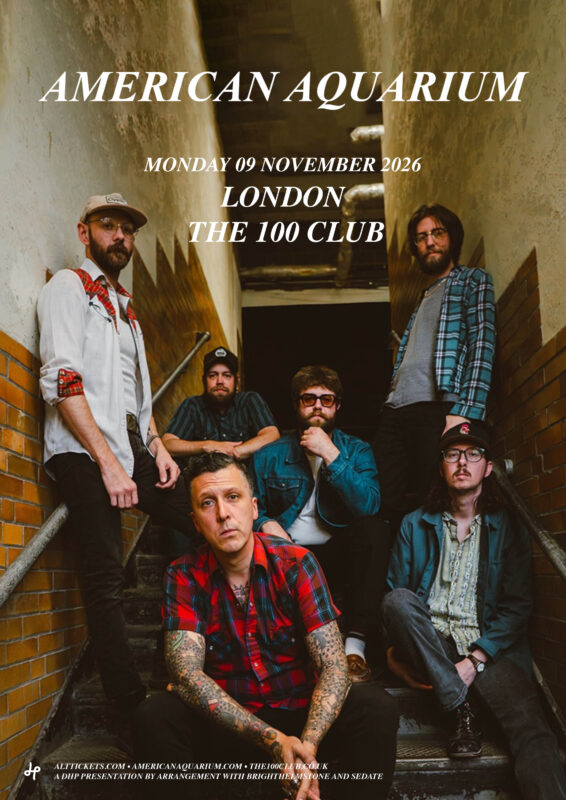
20 years. 20 records. Over 4,000 shows. And somehow, American Aquarium are still finding new waysto surprise us. OnNew Ways to Lose, frontman BJ Barham and his band of road warriors turn twodecades of survival intoa driving, deeply-felt rock & roll statement—one built on resilience, reinvention, and the hard-earned clarity that only comes with time.
“We’ve always been outsiders,” says Barham, whose songwriting has steered the group through lineupchanges, heartache, addiction, recovery, a global pandemic, and every other obstacle imaginable. Longbefore algorithms and viral breakthroughs spelled out success in the music industry, AmericanAquarium earned their place the old-school way: through relentless touringand a stubborn refusal to disappear, even when the odds suggested they should. New Ways to Loseturns that outsider status into armor.
Produced once again by multi-time Grammy winner Shooter Jennings, the album was recorded in LosAngeles over a 10-day session that captured the band at their most immediate and alive. Much of therecord was tracked live, with Jennings encouraging spontaneity and instinct over perfection, while around of overdubs offered the opportunity to add three-part harmonies and hornarrangements to thesongs. The result is a muscular, cinematic record that embraces both sides of American Aquarium’s identity: the bruised confessionals of a songwriter who’s already spent decades sharpening his craft,and the full-throttle release of ananthemic, amplified rock & roll band. Hot-wired with the sameelectricity as their live show, New Ways to Losenods to heartland heroes like Bruce Springsteen, TomPetty, and Neil Young while remaining unmistakably American Aquarium.
For Barham—who formed the band in 2006 in Raleigh, North Carolina—the album isn’t just asnapshot on a band at its peak. It’s a personal turning point, too. “All of my records are yearbooks,” hesays. “Twenty years from now, I’ll pull them off the shelf and remember exactly who I was when I wrotethem.” If earlier albums offered glimpses of a man in his 20s, making his way through a haze ofuncertainty, heartache, and bad behavior, thenNew Ways to Losefinds Barham writing from a place ofhard-won maturity. He’s not justa songwriter anymore; he’s a husband, father, and bandleader who’sfully comfortable confronting the dark corners of the human experience. Across these ten songs, hetackles themes like the downfall of small-town America, the yearning for true connection,thesocioeconomic wreckage of unconstitutional politics, and even the devastation of losing a beloved pet,making room for tenderness and gratitude amidst the sonic stomp of his band. “Twin Flames,” writtenfor his wife, stands as one of the most vulnerable love songs of his whole career, a reflection of a full-grown man no longer afraid to say exactly what he means.
The album’s title comes from legendary NC State Wolfpack announcer Gary Hahn, whose on-air quips—”and NC State finds a new way to lose today”—became metaphors for both sports fandom and themusic business. “No matter what success you find, you’re always looking up the ladder at what youdon’t have,” says Barham, who’s hand-carved a fiercely independent career outside the traditionalmachinery of the industry. Along the way, American Aquarium have earned an international audience,headlined bucket-list venues like the Ryman Auditorium and Red Rocks, and even launched their ownfestival, Road to Raleigh, all without a major label, mainstream radio support, or the kind of buzz-worthy hype reserved for music industry darlings. “It’s about trying so hard to win at something,” headds, “but always finding a way to lose at it.” But in true American Aquarium fashion, the phrase isdelivered with a grin and a shrug rather than defeat. After all, this is a band that built their own tablewhen nobody offered them a seat.
That spirit runs through every corner ofNew Ways to Lose. Released independently through Barham’sown Losing Side Records, the albumdoubles down on the freedom that American Aquarium have spenttwo decades fighting for. They own their publishing. They answer to nobody. And while the industrycontinues chasing trends, American Aquarium are still doing things their own way—including dropping the album just one week after announcing it. “We take our hits and we get back up,” Barham says, “and we do what we do. There are three things you can count on: death, taxes, and American Aquarium showing up to your town once a year to play a rock &roll show.”
When it comes to New Ways to Lose, the band’s rock & roll show looms large. Musically, the recorddistills the energy of those concerts into one of the band’s most hifi, ear-candy-coated studiorecordings yet. Towering choruses, piano-drivenarrangements, hook-heavy riffs, E Street Band-worthybrass, and screaming guitars give songs like “Out There in the Dark,” “Whatever Helps You Sleep at Night,” and “Bad Habits” an expansive rock & roll scope. “Our live show is 90 minutes of us kicking yourthroat in,” Barham adds. “We wanted to make a record that felt representative of that.”
Still, beneath the heartland hooks and sweaty stomp lies the same emotional honesty that has alwaysdefined American Aquarium. Barham may no longer be the young roadwarrior chronicling breakupsand burnout from the front seat of a van, but he remains obsessed with documenting what life costs us—and what keeps us moving forward. New Ways to Lose is a record about loss, survival, maturity, andthe strange beauty of getting back up after life knocks the wind out of you.
Twenty years in, American Aquarium aren’t chasing validation anymore. They’ve built somethingbigger: a career on their own terms, a loyal community, and a catalog that continues to evolve withoutcompromise.New Ways to Losedoesn’t sound like a band slowing down. It sounds like winning—likemusicians who know exactly who they are.